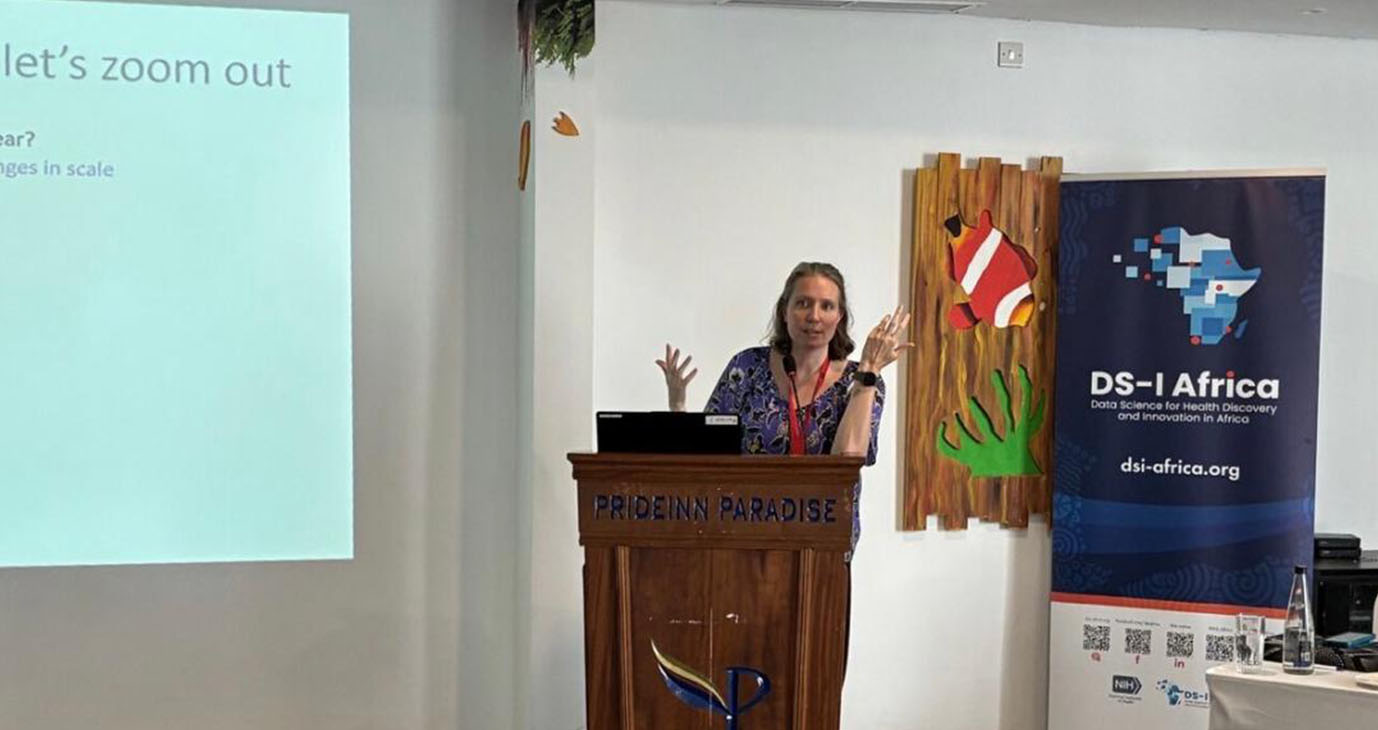
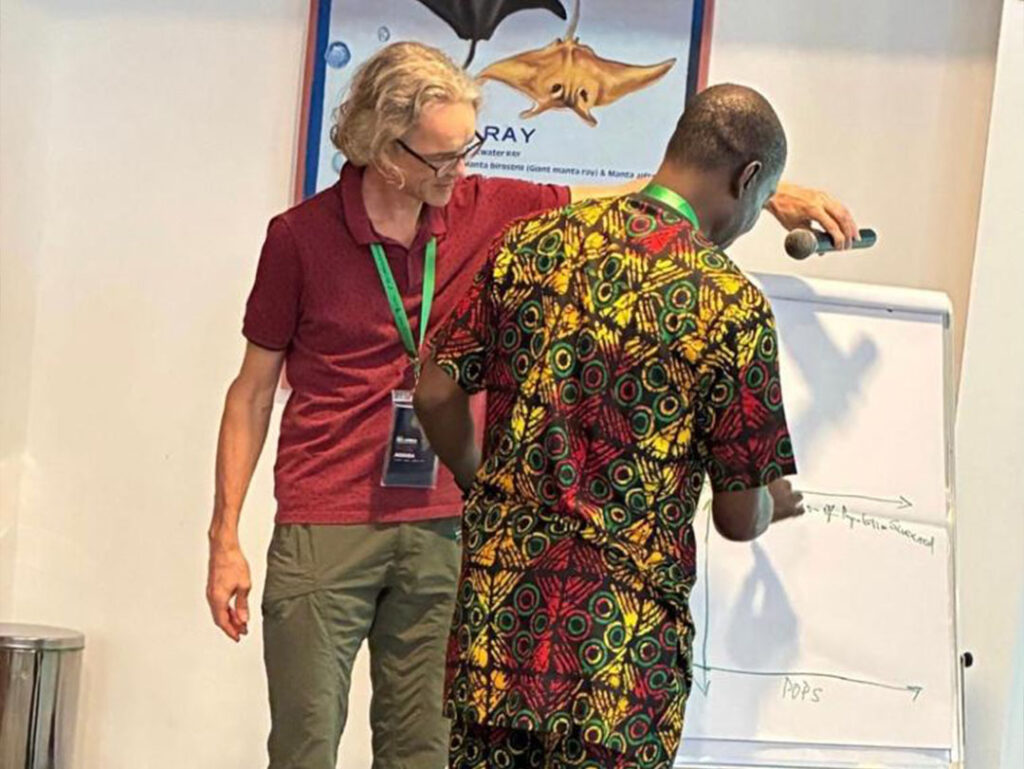
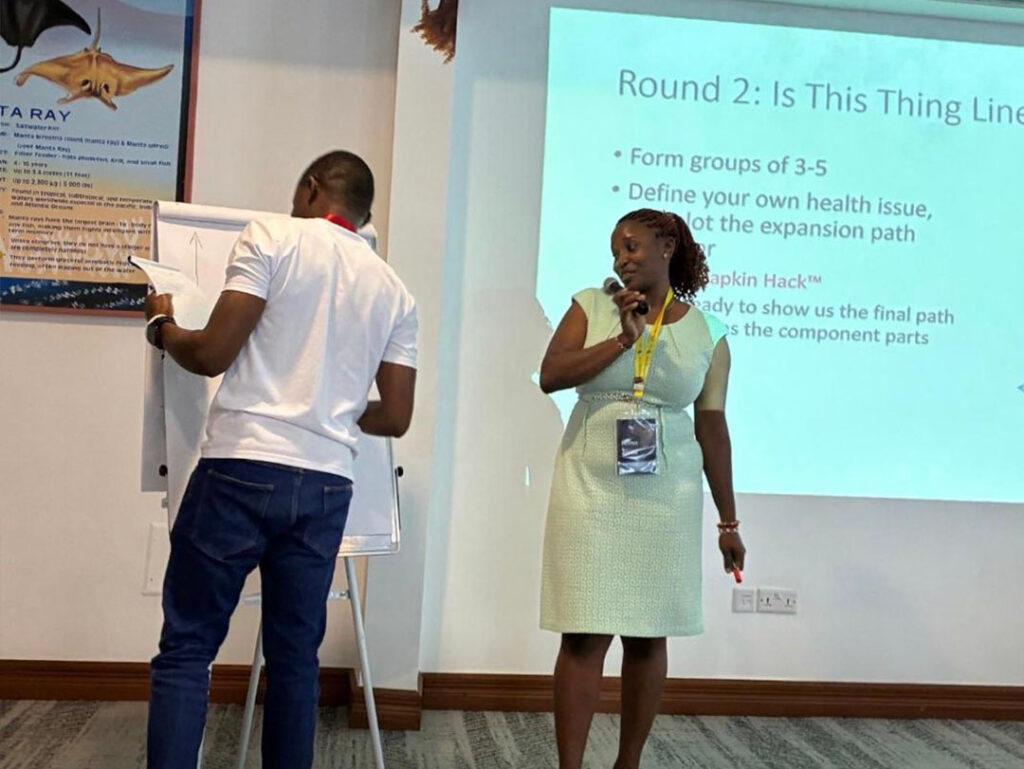
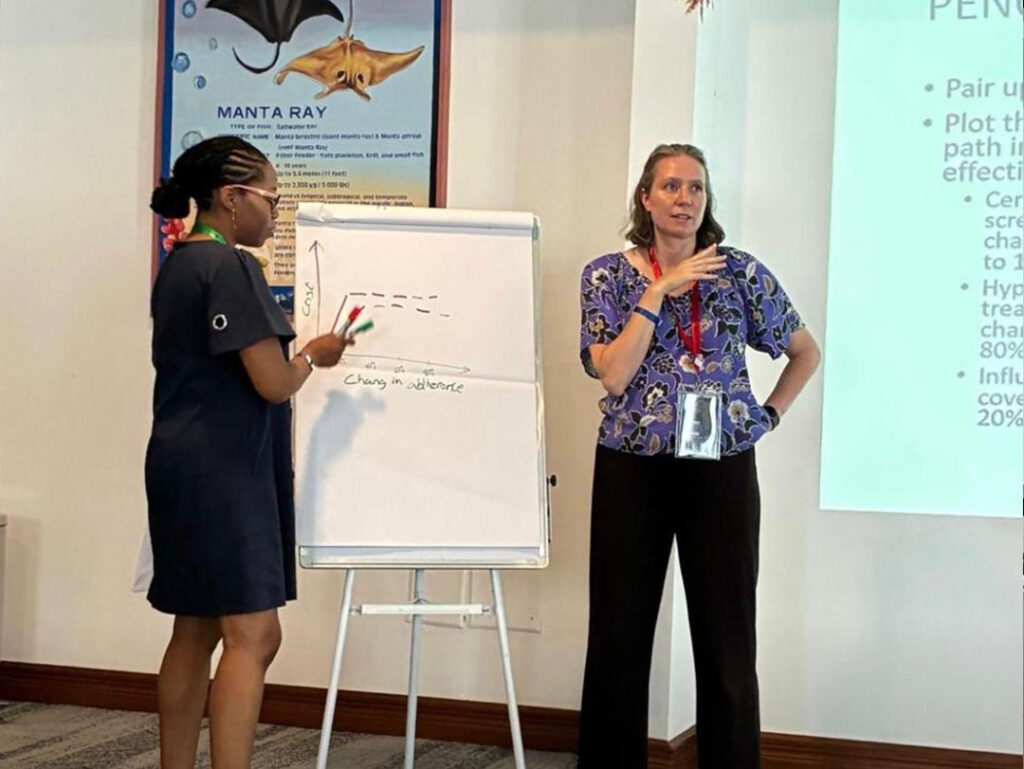
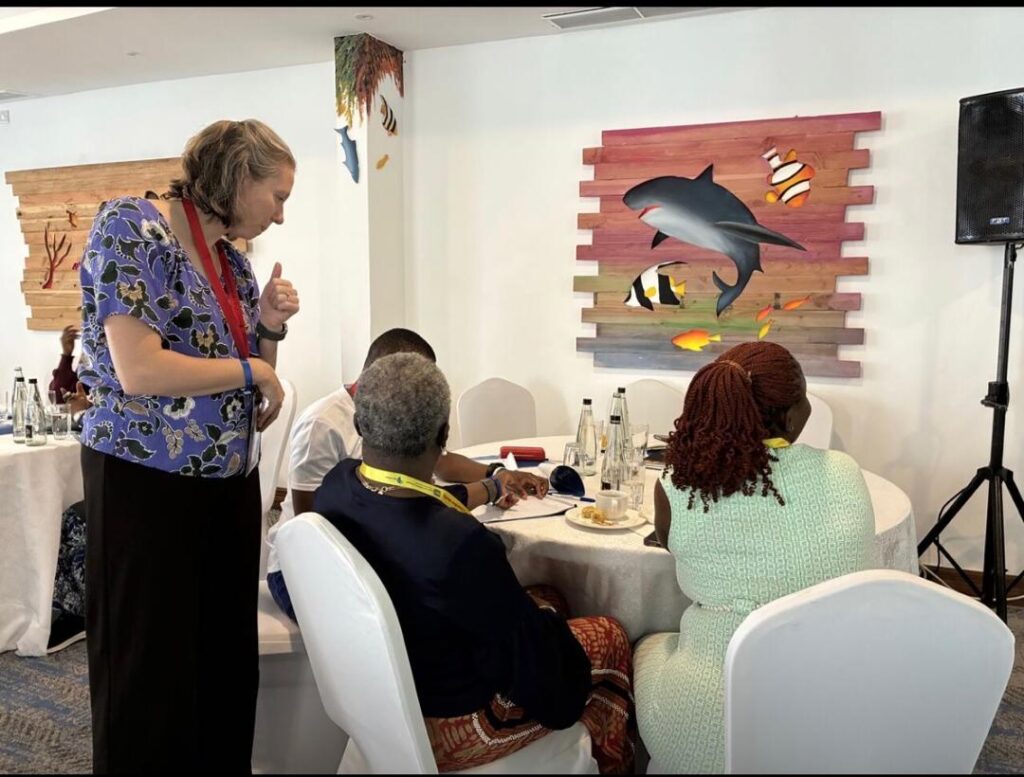
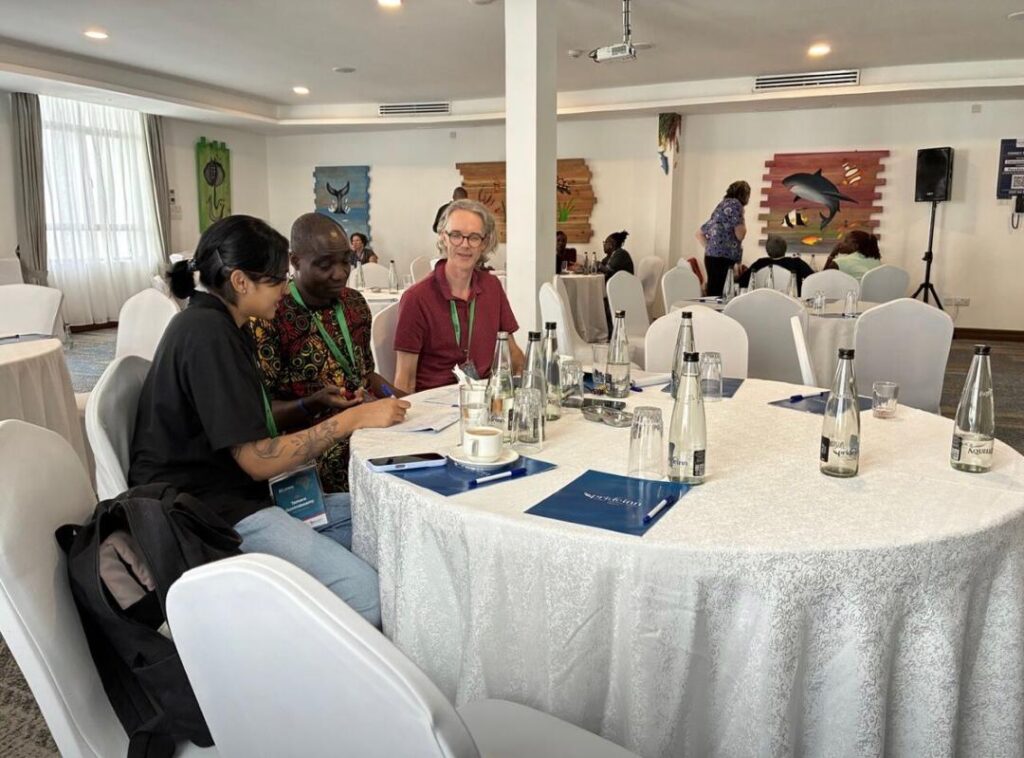
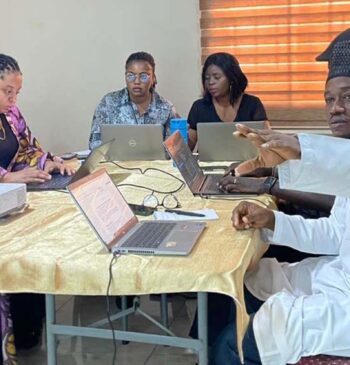
The 2026 DS-I Africa Consortium Meeting opened on an engaging and interactive note as Dr. Meagan Fitzpatrick led participants through the Napkin Math Toolathon—a hands-on workshop designed to simplify complex scientific thinking through the power of sketching.
Reflecting on the experience, Dr. Fitzpatrick shared:
It was a wonderful experience to lead the Napkin Math Toolathon at the DS-I Africa Consortium Meeting. Over the last several years, our computational models have become increasingly powerful and fast. To think clearly amid this complexity, we also need to strengthen some analog skills—such as sketching our hypotheses on a napkin.
The workshop challenged participants to set aside their laptops, pick up pencils, and focus on capturing the fundamental mechanics of complex public health problems using simple illustrations. The exercise encouraged researchers to distil complicated concepts into clear, visual hypotheses before translating them into sophisticated computational models.
Throughout the session, participants gradually transformed initial uncertainty into lively discussions, collaborative problem-solving, and creative scientific exploration.
Dr. Fitzpatrick reflected on this transformation, saying:
As an instructor, it was incredibly rewarding to watch participants shift from hesitant first drawings to animated conversations about their hypotheses.
Participants echoed the value of the exercise;
Prof. Lanre Lawal remarked, “Using mathematical modelling doesn’t have to be complicated.”
Dr. Johan Van der Molen encouraged researchers to begin with simple models and build complexity over time, while Dr. Tamara highlighted that the Napkin Math approach can help validate research models and support the development of sound assumptions before formal modelling begins.
Perhaps the greatest testament to the workshop’s success came during the scientific sessions that followed. Dr. Fitzpatrick observed participants continuing to sketch “napkin math” diagrams in their notebooks as they discussed research ideas and modelling approaches.
In her words,
Nothing could make me prouder.
The spontaneous adoption of the technique beyond the workshop itself demonstrated the immediate impact of the Toolathon. By encouraging researchers to think visually, ask better questions, and simplify complexity, the Napkin Math Toolathon left participants with a practical approach they can continue applying long after the consortium meeting concluded.
It was a powerful reminder that some of the most innovative scientific ideas can begin with nothing more than a pencil, a piece of paper—and a simple sketch.