INFORM Africa Research Hub Equips Government officials and Public Health Professionals with R Programming and Spatial Data Analysis Skills
As part of its commitment to strengthening data science capacity within Nigeria’s public health sector, the INFORM Africa Research Hub organized a five-day R Programming and Spatial Data Analysis Training from 27–31 October 2025 at the International Research Centre of Excellence (IRCE), IHVN Campus, Abuja.
The training brought together 20 participants, including representatives from the Federal Ministry of Health and Social Welfare (FMOH), National Agency for the Control of AIDS (NACA), Nigeria Centre for Disease Control and Prevention (NCDC), National Primary Health Care Development Agency (NPHCDA), National Emergency Management Agency (NEMA), and the International Research Centre of Excellence (IRCE).
The need for the training was identified following earlier INFORM Africa capacity-building activities, during which participants expressed a desire to strengthen their data analysis skills in order to fully utilize the digital tools and datasets developed by the project. Delivered by members of the INFORM Africa and IRCE teams, the training combined lectures with extensive hands-on practical sessions, enabling participants to develop skills that can be directly applied to public health research and programme implementation.
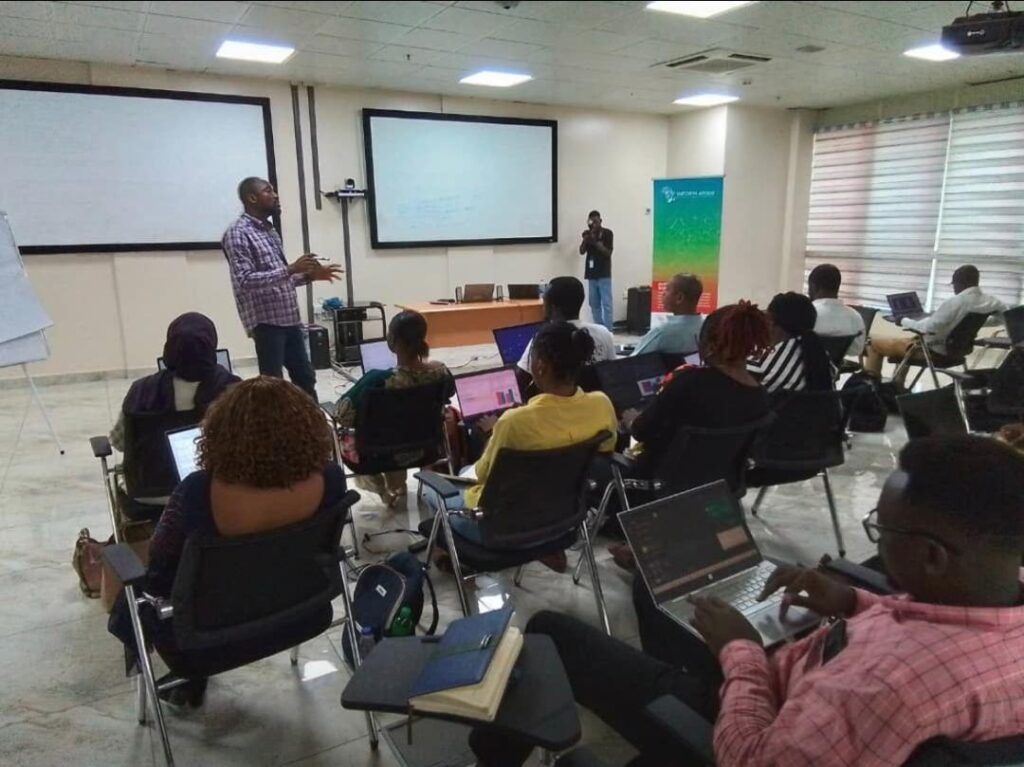
The training covered the complete analytical workflow in R and RStudio, beginning with setting up the R environment, importing datasets, and managing projects. Participants progressed to data cleaning and wrangling, descriptive statistics, data visualization, and hypothesis testing, before advancing to spatial data analysis and geospatial visualization. Practical sessions introduced participants to importing shapefiles, integrating spatial and non-spatial datasets, and creating thematic maps using R packages such as sf and tmap.
Throughout the week, participants worked with real-world public health datasets, strengthening their ability to transform complex data into meaningful insights for research and decision-making. Interactive exercises, assignments, and collaborative learning encouraged participants to build confidence while applying newly acquired analytical techniques to practical public health scenarios.
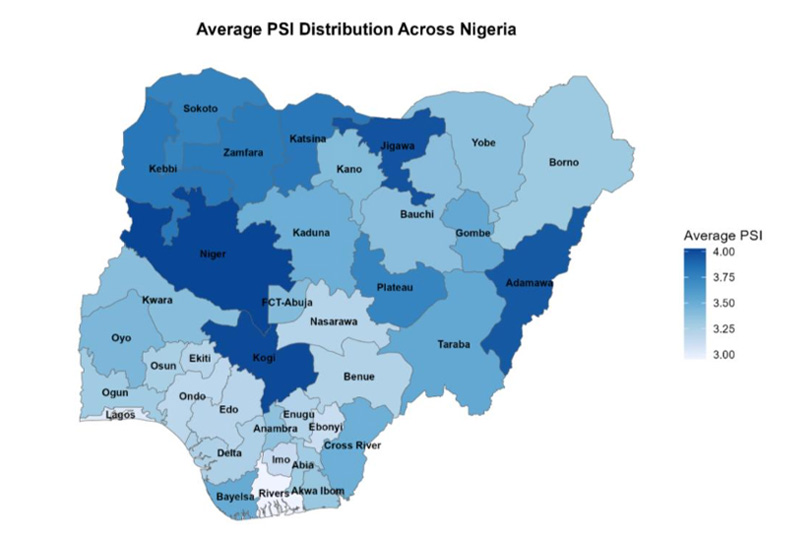
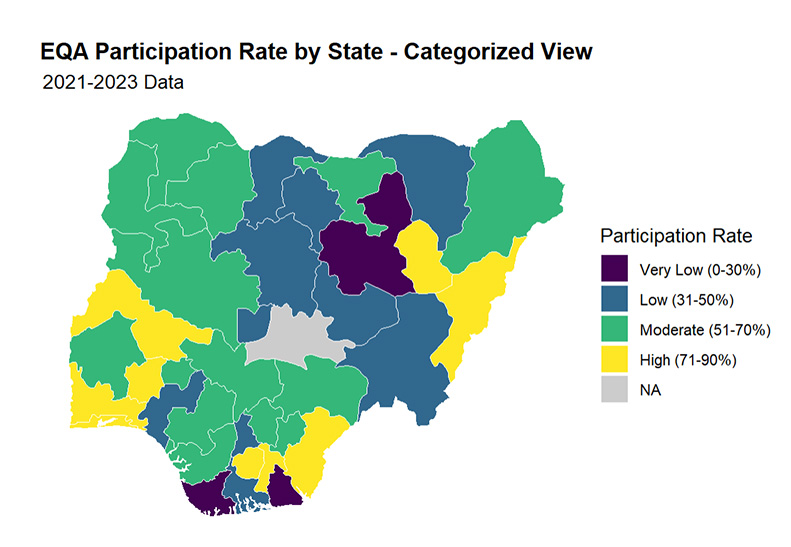
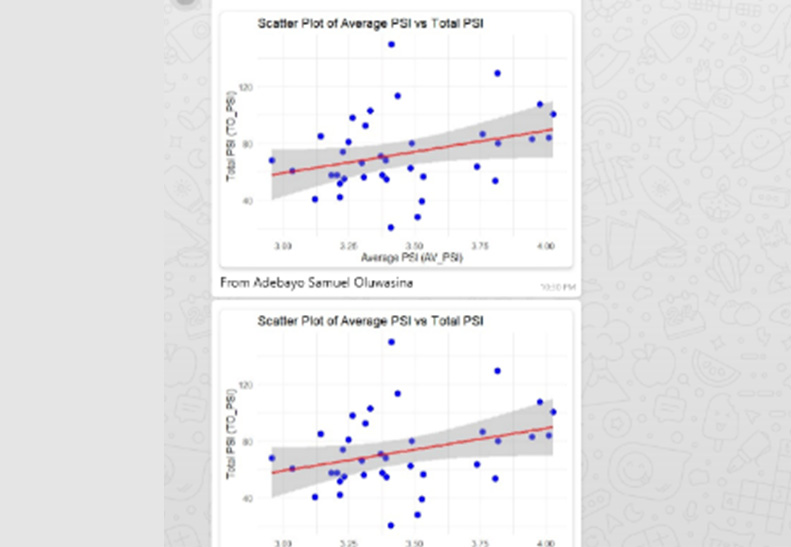
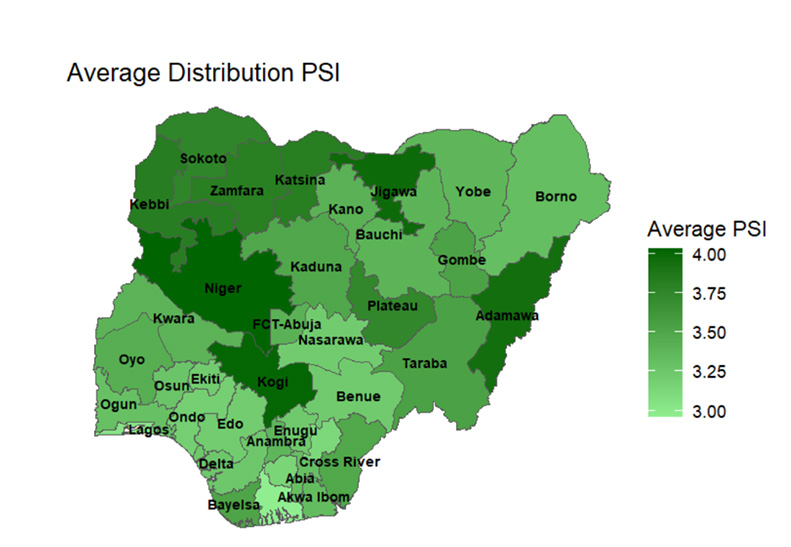
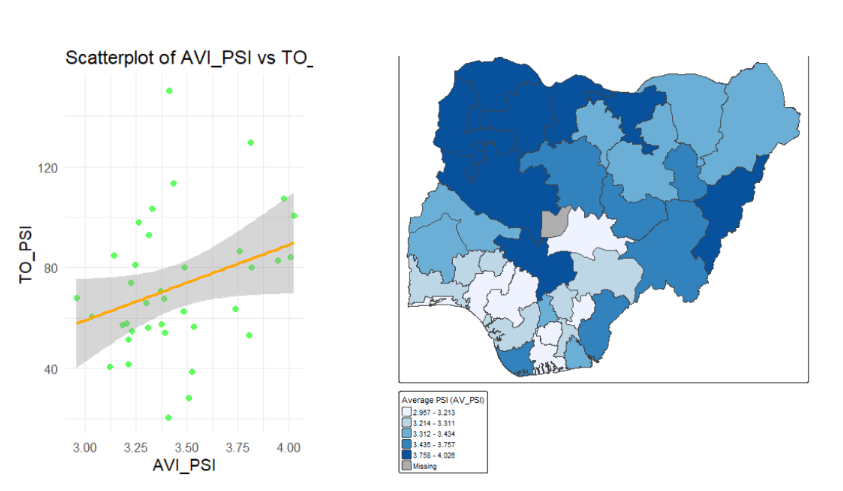
Practical outputs from trainees during the Geospatial training exercise
A major outcome of the training was the participants’ commitment to sustaining collaboration beyond the workshop. During the closing session, trainees agreed to jointly develop a research manuscript using integrated datasets on the Place Resilience Index (PRI) at Local Government Area (LGA) level, 2024 flood risk data, and confirmed and suspected cholera cases across Nigerian LGAs. A multidisciplinary writing team comprising representatives from the participating organizations was established to lead the initiative, demonstrating the training’s success in fostering cross-institutional collaboration and translating newly acquired skills into actionable public health research.
By investing in advanced statistical programming and spatial analysis skills, the INFORM Africa Research Hub continues to strengthen Nigeria’s capacity for data-driven public health research, spatial epidemiology, and evidence-informed decision-making. The training represents another milestone in the Hub’s mission to build a network of skilled professionals capable of leveraging data science to address current and emerging public health challenges across Africa.